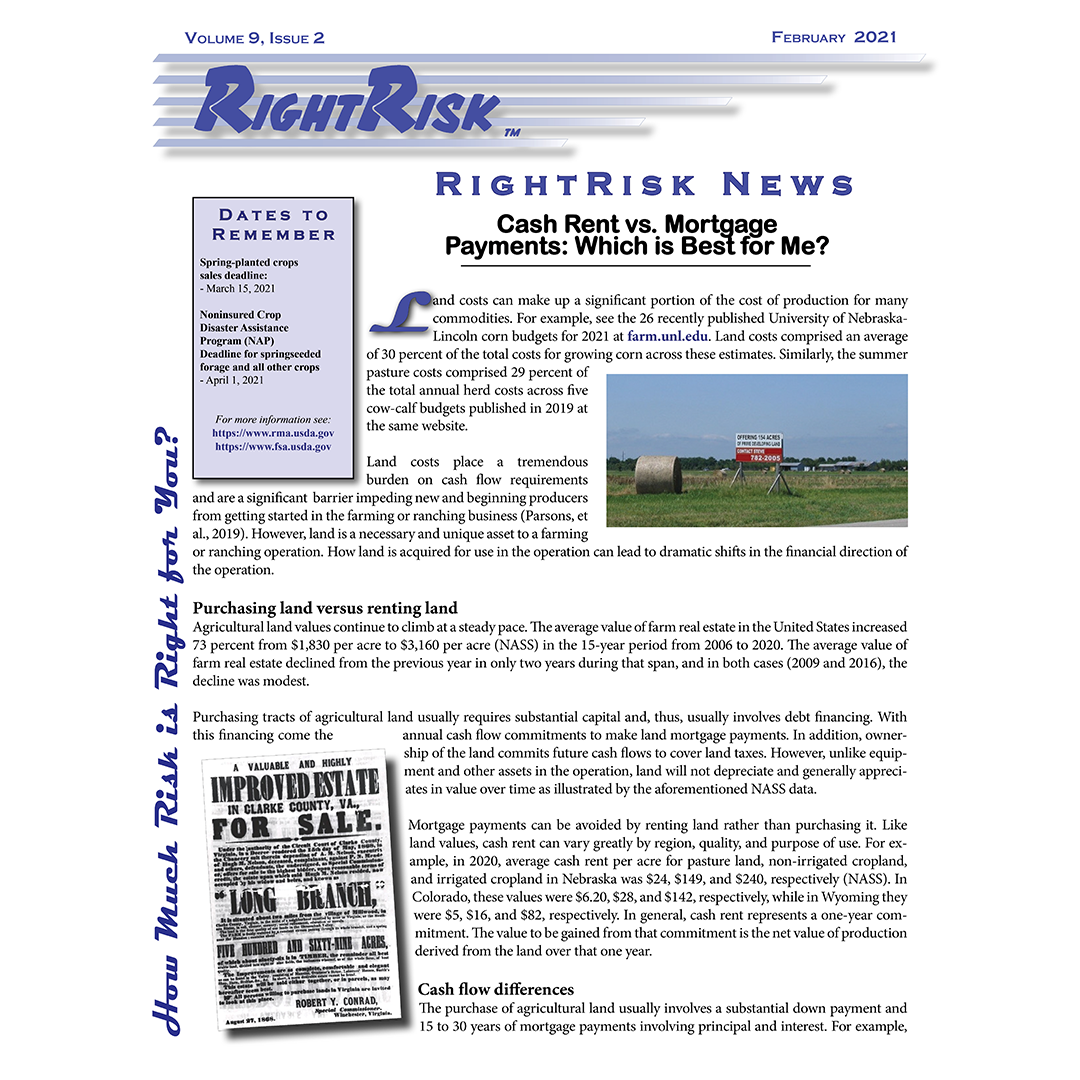
- Cash Rent vs. Mortgage Payments: Which is Best for Me?
- Other RightRisk News
- RightRisk.org
To subscribe/unsubscribe, send email to information@RightRisk.org with subject line “Subscribe/Unsubscribe RightRisk News”

To subscribe/unsubscribe, send email to information@RightRisk.org with subject line “Subscribe/Unsubscribe RightRisk News”
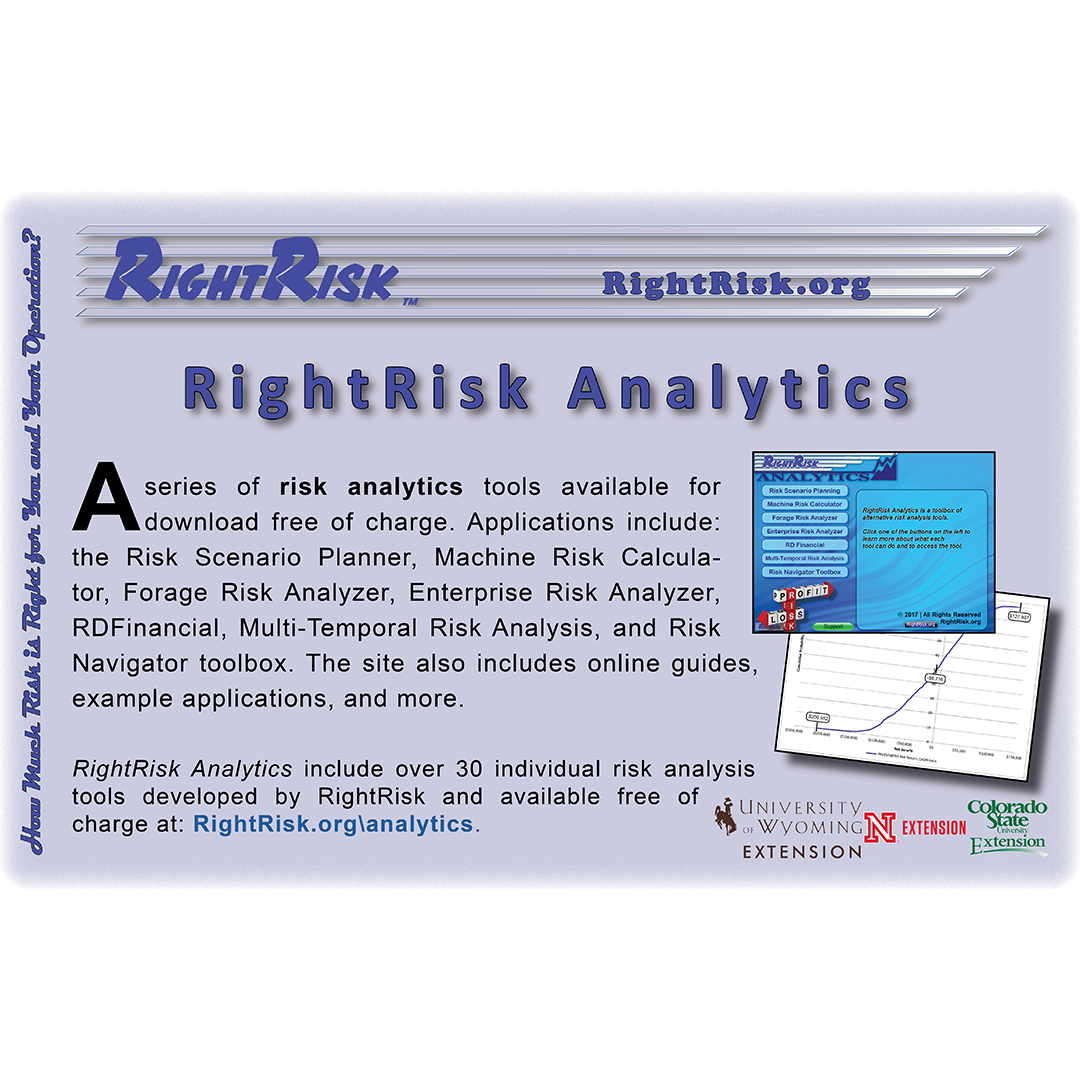
RightRisk Analytics is a series of risk analytics tools available for download free of charge. Applications include: the Risk Scenario Planner, Machine Risk Calculator, Forage Risk Analyzer, Enterprise Risk Analyzer, RDFinancial, Multi-Temporal Risk Analysis, and Risk Navigator toolbox. The site also includes online guides, example applications, and more.
RightRisk Analytics include over 30 individual risk analysis tools developed by RightRisk and available free of charge at: RightRisk.org\analytics.
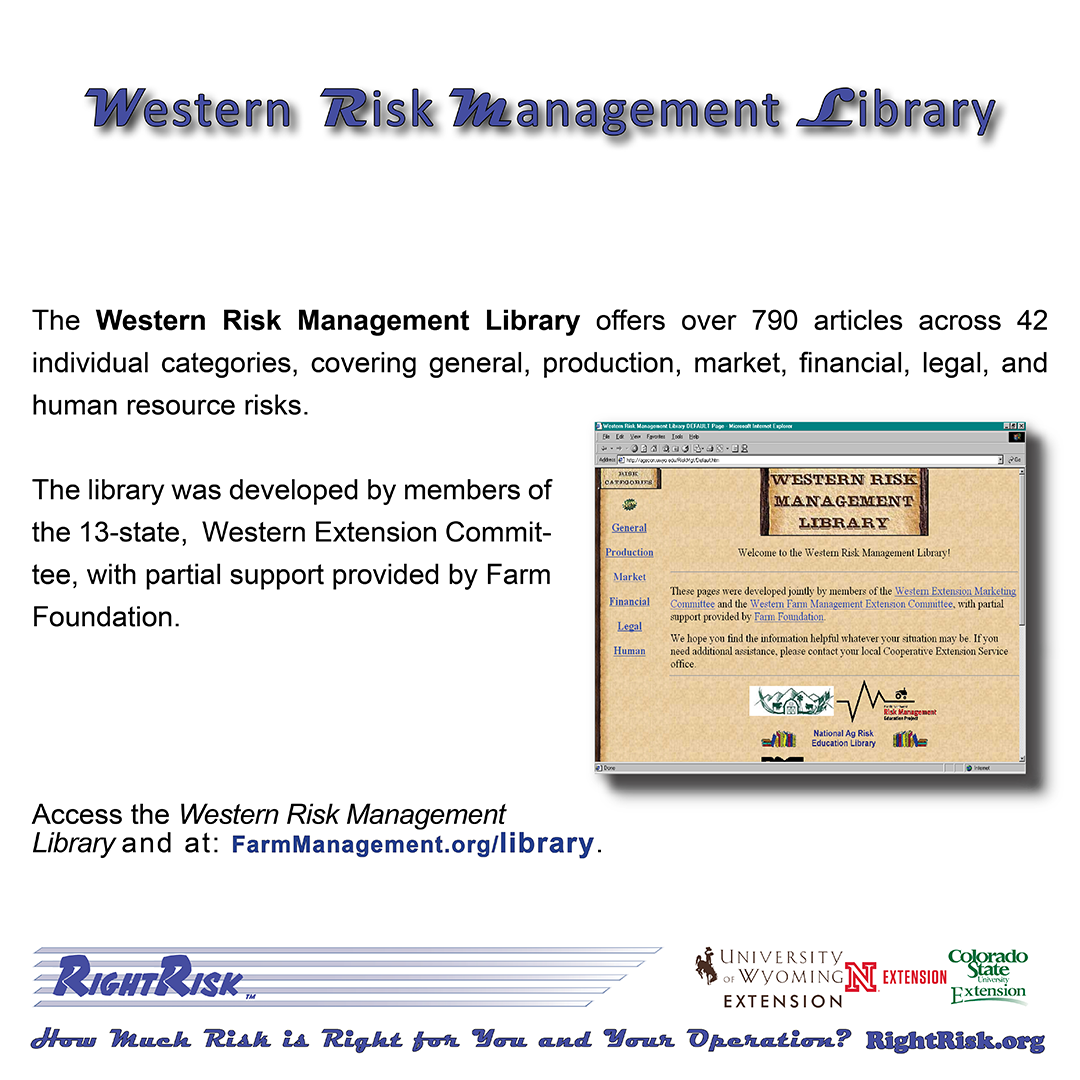
The Western Risk Management Library offers over 790 articles across 42 individual categories, covering general, production, market, financial, legal, and human resource risks. The library was developed by members of the 13-state, Western Extension Committee, with partial support provided by Farm Foundation.
Access the Western Risk Management Library and at: FarmManagement.org/library.
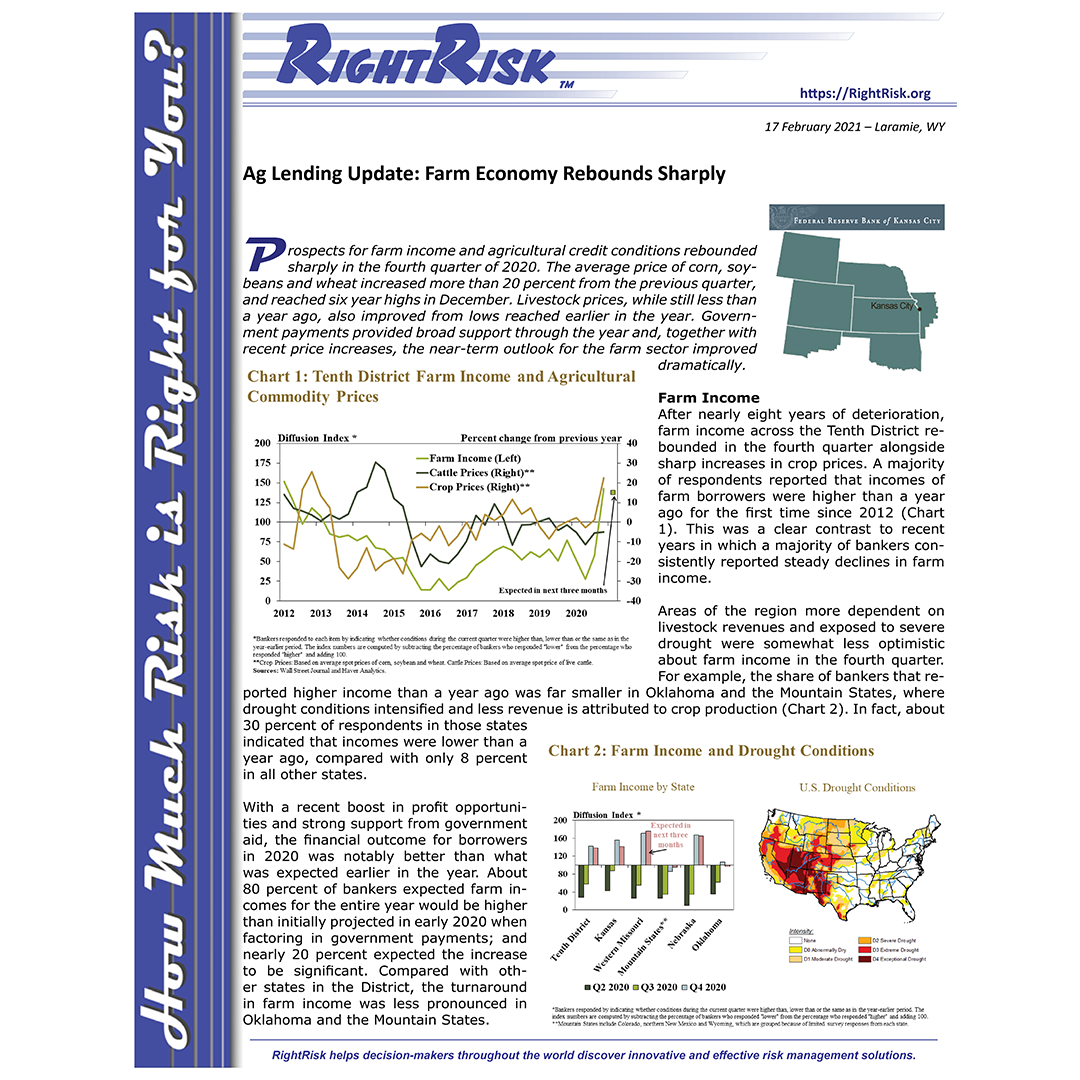
Prospects for farm income and agricultural credit conditions rebounded sharply in the fourth quarter of 2020. The average price of corn, soybeans and wheat increased more than 20% from the previous quarter, and reached six year highs in December. Livestock prices, while still less than a year ago, also improved from lows reached earlier in the year. Government payments provided broad support through the year and, together with recent price increases, the near-term outlook for the farm sector improved dramatically.
RightRisk is an innovative risk research and education effort to help farmers and ranchers understand and explore risk management decisions and evaluate the effects of those decisions. RightRisk.org hosts the risk management education products developed by the RightRisk Education Team. Information on the site includes: 14 free, online self-study courses, monthly newsletters, risk simulations, risk analytics tools, recorded presentations/webinars, publications, links to other online resources, and much, much more . . .
Access the free online risk management materials from RightRisk at: RightRisk.org.

This can be a busy time of year for many farmers and ranchers. Calving season may be in full swing, feeding and other chores are carried out in cold weather, and tax returns are completed and filed. In addition, there are a plethora of meetings, conferences and other educational opportunities. Finalizing last year’s financial records in order to file tax reports and analyze the business is not a fun task to consider. Some farmers and ranchers are required to file their tax returns by March 1, while others have until a later date. Filing deadlines depend, in part, on business form (sole proprietorship, partnership, etc.) and any estimated taxes paid throughout the year. . . click here to read more.
Bought to you by:
Progressive Cattle and The RightRisk Team
Tax issues are important for agricultural operations because income and self-employment taxes are a major cost and also because more and more USDA programs are linked to a producer’s federal income tax return.
Learn more about taxes and implications for agricultural businesses at: RuralTax.org/library.
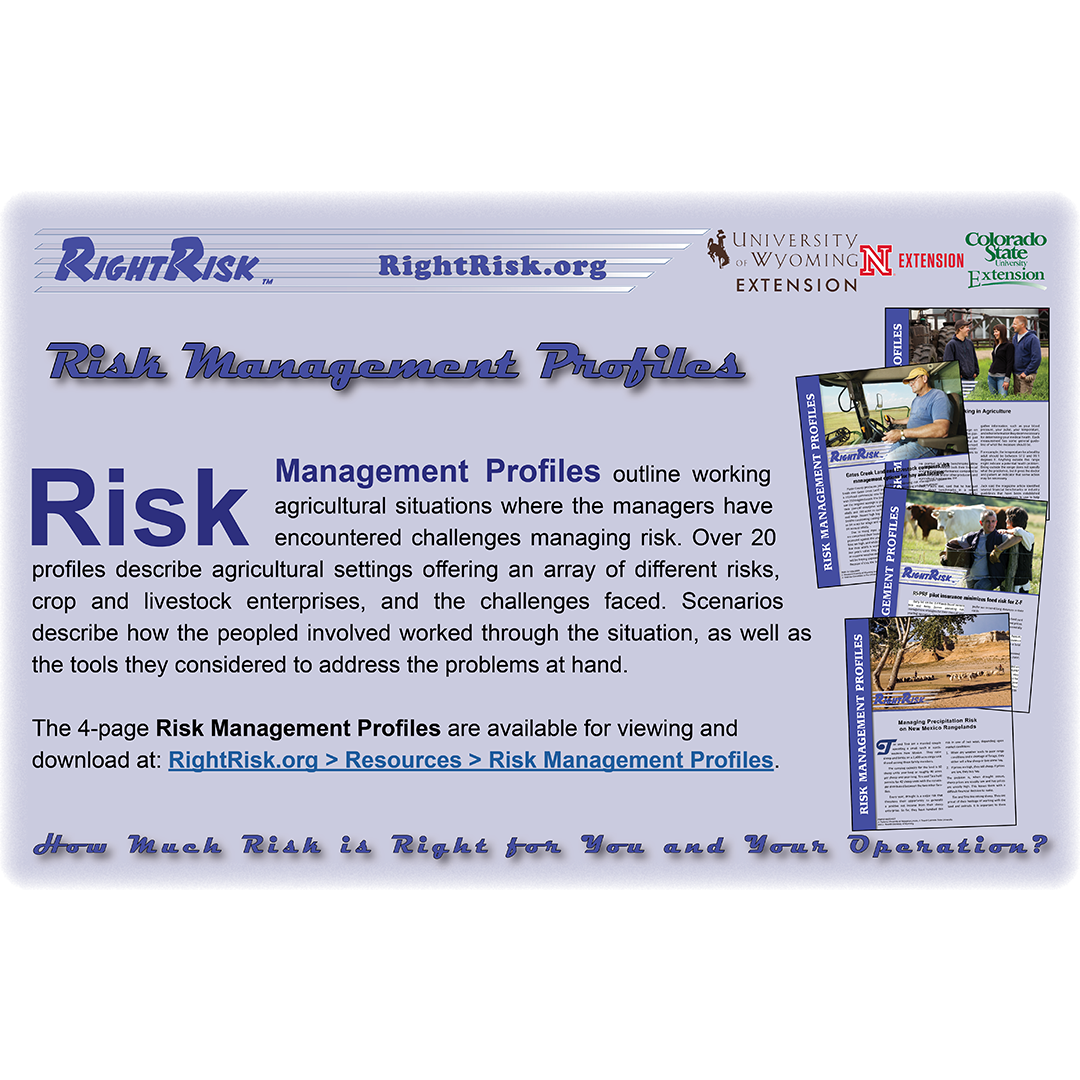
Risk Management Profiles outline working agricultural situations where the managers have encountered challenges managing risk. Over 20 profiles describe agricultural settings offering an array of different risks, crop and livestock enterprises, and the challenges faced. Scenarios describe how the peopled involved worked through the situation, as well as the tools they considered to address the problems at hand.
The 4-page RISK MANAGEMENT PROFILES are available for viewing and download at: https://RightRisk.org/RiskManagementProfiles.
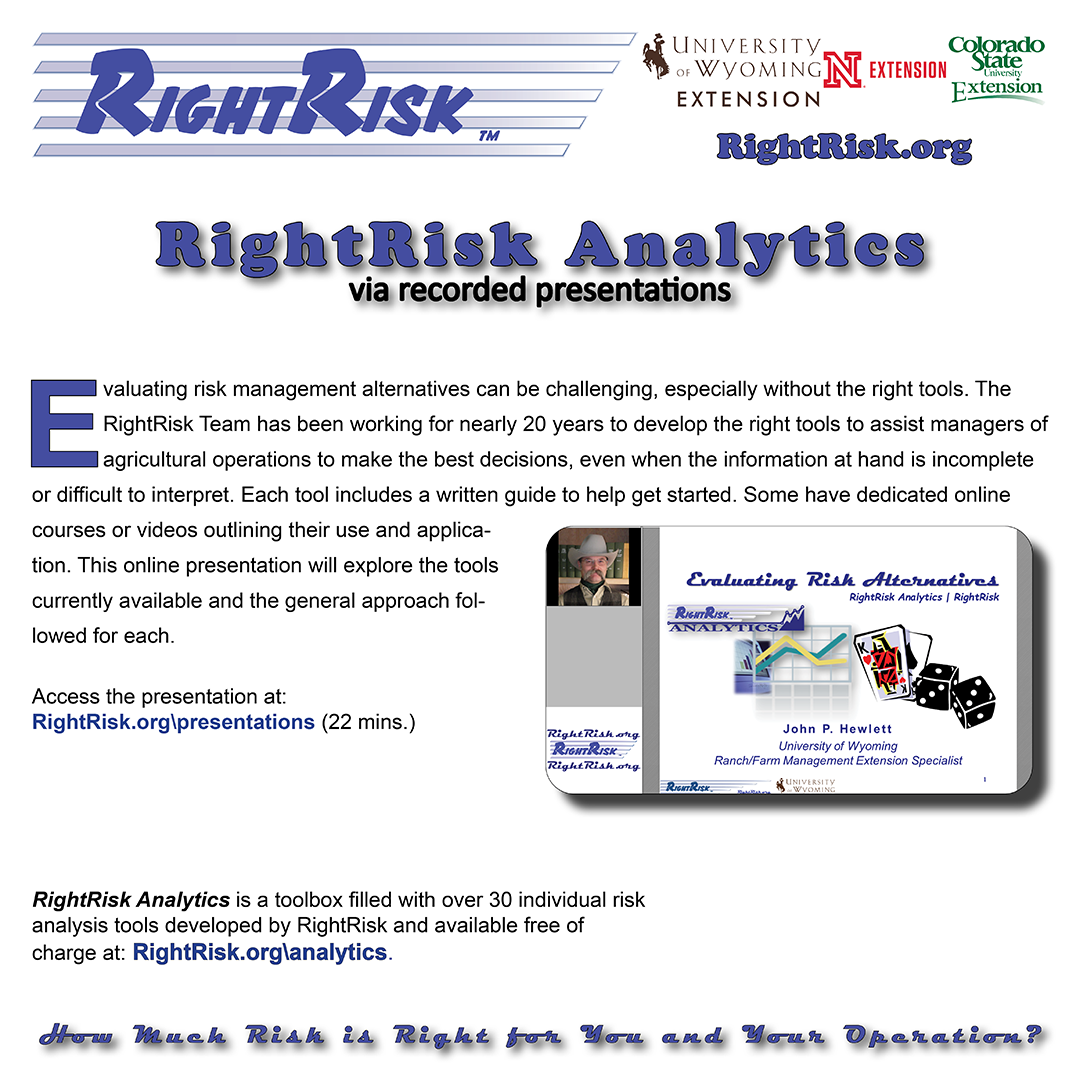
Evaluating risk management alternatives can be challenging, especially without the right tools. The RightRisk Team has been working for nearly 20 years to develop the right tools to assist managers of agricultural operations to make the best decisions, even when the information at hand is incomplete or difficult to interpret. Each tool includes a written guide to help get started. Some have dedicated online courses or videos outlining their use and application. This online presentation will explore the tools currently available and the general approach followed for each.
Access the presentation at: RightRisk.org\presentations (22 mins.)
RightRisk Analytics is a toolbox filled with over 30 individual risk analysis tools developed by RightRisk and available free of charge at: RightRisk.org\Analytics.